Milwaukee Glass pH Probe - Hydros
Lab-grade, Glass pH Probe with BNC Connector
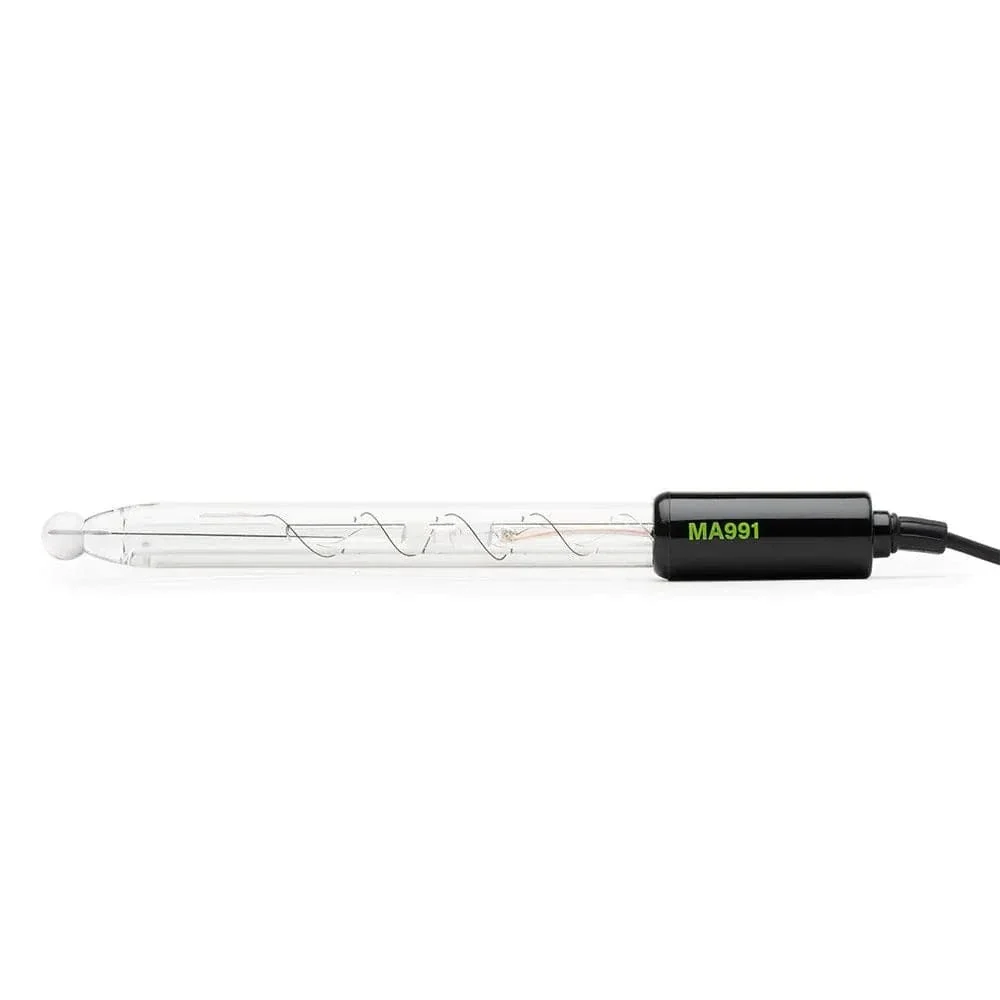
The Milwaukee Glass pH Probe is a high-quality pH probe that is suitable for use with any controller or meter that has a BNC connector. This lab-grade electrode is specifically designed for the education market and is perfect for students to learn with. It features a gel-filled glass replacement and a glass body, making it easy to clean and maintain. This glass probe has a high impedance and is designed to provide fast and accurate response times. It comes with a 1-meter cable and a BNC connector, ensuring a secure and reliable connection. Additionally, it can withstand temperatures ranging from -5 to 70°C (23 to 158°F).
Specifications:
- pH Range: 0 to 13
- Temperature Range: 23 to 104°F (-5 to 40°C)
- Shaft: Glass
- Reference Electrolyte: Gel, KCL 3.5 m
- Reference Junction: ceramic, single
- Reference Type: single, Ag/AgCl
- Shape of Membrane: Spheric
- Maximum Pressure: 0.1 Bar
- Connector Type: BNC
- Cable Length: 3 Feet (1 meter)
- Shaft Length: 4.72 inches (120 mm)
- Diameter: 0.47 inches (12 mm)
Use and Care
The pH meters typically start performing poorly because of problems with the probe. The glass sensing bulb and the reference junction are two parts of the pH probe that cause problems.
- Sensing Bulb - The sensitivity of the glass bulb in pH probes decreases with use and will eventually lead to failure.
- Reference Junction - The reference junction is a tiny aperture that enables the pH meter to compare the sample with a reference. The reading is produced by evaluating the electrical disparity between the sample and the reference. If the junction hole is obstructed, the pH probe will cease functioning. To prolong the life of your pH electrode, you can follow the tips below.
Storage
It is essential to keep the pH probe hydrated to maintain its sensitivity. If the probe is stored in a dry environment for a long time, it can damage its sensitivity and clog the junction hole. To avoid this, it is recommended to store the probe in pH probe storage solution or pH calibration buffers. Do not store the probe in tap or DI water, as it can damage its sensitivity. The best way to store the probe is to fill the probe's cap with storage solution or calibration buffer and tighten the cap to prevent leakage. It is also recommended to store the electrode upright to reduce the potential for leakage further.
Cleaning
Regularly soaking your electrode in a cleaning solution can prevent residue buildup and blockage of the junction, especially when dealing with samples containing organic material.
Calibration
The sensitivity of pH-sensing bulbs decreases over time. Therefore, it is essential to calibrate your PRO pH meter regularly. Additionally, calibrate it after cleaning or storing it for an extended period.
Lab-grade, Glass pH Probe with BNC Connector
The Milwaukee Glass pH Probe is a high-quality pH probe that is suitable for use with any controller or meter that has a BNC connector. This lab-grade electrode is specifically designed for the education market and is perfect for students to learn with. It features a gel-filled glass replacement and a glass body, making it easy to clean and maintain. This glass probe has a high impedance and is designed to provide fast and accurate response times. It comes with a 1-meter cable and a BNC connector, ensuring a secure and reliable connection. Additionally, it can withstand temperatures ranging from -5 to 70°C (23 to 158°F).
Specifications:
- pH Range: 0 to 13
- Temperature Range: 23 to 104°F (-5 to 40°C)
- Shaft: Glass
- Reference Electrolyte: Gel, KCL 3.5 m
- Reference Junction: ceramic, single
- Reference Type: single, Ag/AgCl
- Shape of Membrane: Spheric
- Maximum Pressure: 0.1 Bar
- Connector Type: BNC
- Cable Length: 3 Feet (1 meter)
- Shaft Length: 4.72 inches (120 mm)
- Diameter: 0.47 inches (12 mm)
Use and Care
The pH meters typically start performing poorly because of problems with the probe. The glass sensing bulb and the reference junction are two parts of the pH probe that cause problems.
- Sensing Bulb - The sensitivity of the glass bulb in pH probes decreases with use and will eventually lead to failure.
- Reference Junction - The reference junction is a tiny aperture that enables the pH meter to compare the sample with a reference. The reading is produced by evaluating the electrical disparity between the sample and the reference. If the junction hole is obstructed, the pH probe will cease functioning. To prolong the life of your pH electrode, you can follow the tips below.
Storage
It is essential to keep the pH probe hydrated to maintain its sensitivity. If the probe is stored in a dry environment for a long time, it can damage its sensitivity and clog the junction hole. To avoid this, it is recommended to store the probe in pH probe storage solution or pH calibration buffers. Do not store the probe in tap or DI water, as it can damage its sensitivity. The best way to store the probe is to fill the probe's cap with storage solution or calibration buffer and tighten the cap to prevent leakage. It is also recommended to store the electrode upright to reduce the potential for leakage further.
Cleaning
Regularly soaking your electrode in a cleaning solution can prevent residue buildup and blockage of the junction, especially when dealing with samples containing organic material.
Calibration
The sensitivity of pH-sensing bulbs decreases over time. Therefore, it is essential to calibrate your PRO pH meter regularly. Additionally, calibrate it after cleaning or storing it for an extended period.
Description
Lab-grade, Glass pH Probe with BNC Connector
The Milwaukee Glass pH Probe is a high-quality pH probe that is suitable for use with any controller or meter that has a BNC connector. This lab-grade electrode is specifically designed for the education market and is perfect for students to learn with. It features a gel-filled glass replacement and a glass body, making it easy to clean and maintain. This glass probe has a high impedance and is designed to provide fast and accurate response times. It comes with a 1-meter cable and a BNC connector, ensuring a secure and reliable connection. Additionally, it can withstand temperatures ranging from -5 to 70°C (23 to 158°F).
Specifications:
- pH Range: 0 to 13
- Temperature Range: 23 to 104°F (-5 to 40°C)
- Shaft: Glass
- Reference Electrolyte: Gel, KCL 3.5 m
- Reference Junction: ceramic, single
- Reference Type: single, Ag/AgCl
- Shape of Membrane: Spheric
- Maximum Pressure: 0.1 Bar
- Connector Type: BNC
- Cable Length: 3 Feet (1 meter)
- Shaft Length: 4.72 inches (120 mm)
- Diameter: 0.47 inches (12 mm)
Use and Care
The pH meters typically start performing poorly because of problems with the probe. The glass sensing bulb and the reference junction are two parts of the pH probe that cause problems.
- Sensing Bulb - The sensitivity of the glass bulb in pH probes decreases with use and will eventually lead to failure.
- Reference Junction - The reference junction is a tiny aperture that enables the pH meter to compare the sample with a reference. The reading is produced by evaluating the electrical disparity between the sample and the reference. If the junction hole is obstructed, the pH probe will cease functioning. To prolong the life of your pH electrode, you can follow the tips below.
Storage
It is essential to keep the pH probe hydrated to maintain its sensitivity. If the probe is stored in a dry environment for a long time, it can damage its sensitivity and clog the junction hole. To avoid this, it is recommended to store the probe in pH probe storage solution or pH calibration buffers. Do not store the probe in tap or DI water, as it can damage its sensitivity. The best way to store the probe is to fill the probe's cap with storage solution or calibration buffer and tighten the cap to prevent leakage. It is also recommended to store the electrode upright to reduce the potential for leakage further.
Cleaning
Regularly soaking your electrode in a cleaning solution can prevent residue buildup and blockage of the junction, especially when dealing with samples containing organic material.
Calibration
The sensitivity of pH-sensing bulbs decreases over time. Therefore, it is essential to calibrate your PRO pH meter regularly. Additionally, calibrate it after cleaning or storing it for an extended period.