Three Band Pennant Butterflyfish - Heniochus chrysostomus
Introduction to Three-Band Pennant Butterflyfish (Heniochus chrysostomus)
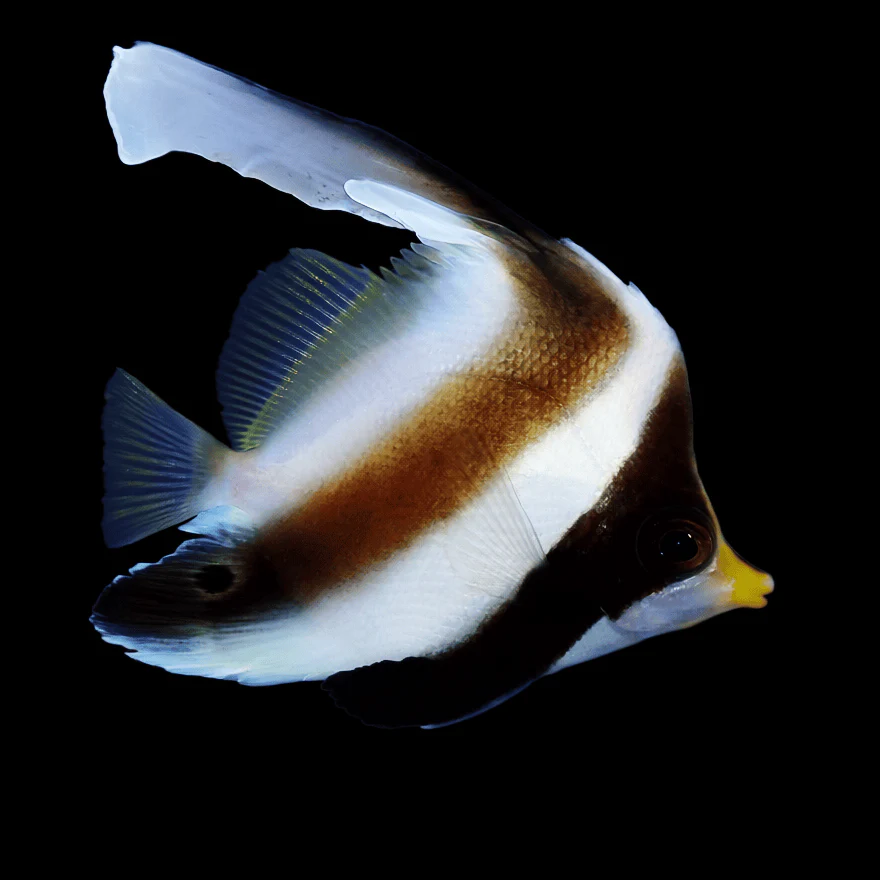
The Three-Band Pennant Butterflyfish is a graceful and eye-catching species known for its tall dorsal “banner” fin and bold black-and-white banding. Often confused with Moorish Idols due to its similar shape, this species is a much more manageable alternative for aquariums. Native to Indo-Pacific reefs, they are active swimmers that do best in groups or pairs and add constant movement to the tank. Their striking appearance and schooling behavior make them a popular choice for larger fish-only systems.
Care Requirements
Care Level: Moderate
Minimum Tank Size: 125+ gallons
Aquarium Setup: Requires ample open swimming space, stable rockwork, and strong filtration
Three-Band Pennant Butterflyfish are active and benefit from tanks that provide both open water for swimming and rockwork for shelter.
Diet & Nutrition
These butterflyfish are omnivores that adapt relatively well to a variety of prepared foods.
Diet: Omnivorous – Requires a mix of meaty and plant-based foods
Recommended Foods:
- Mysis shrimp, brine shrimp, and chopped seafood
- High-quality frozen blends
- Spirulina-based foods and algae sheets
- Pellets and flakes once acclimated
Offering a varied diet helps maintain their health and coloration.
Lifespan & Growth Rate
Lifespan: 5–10+ years
Growth Rate: Moderate – Can reach up to 6–7 inches
They grow steadily and remain active swimmers throughout their lifespan.
Temperament & Compatibility
Temperament: Peaceful to Semi-Aggressive
Reef Safe? No – Will nip at corals and invertebrates
Three-Band Pennant Butterflyfish do well with other peaceful to moderately aggressive fish but are best kept in fish-only systems due to their tendency to pick at corals.
Common Challenges & Considerations
- Not Reef Safe: Known to nip at corals and sessile invertebrates
- Active Swimmer: Requires a large tank with plenty of space
- Best in Groups: Can be kept singly, but often do better in pairs or small groups
- Misidentification: Often confused with Moorish Idols, which have very different care requirements
Water Conditions
Temperature: 75–77°F
dKH (Alkalinity): 8–12
pH: 8.1–8.3
Specific Gravity: 1.024–1.026
Introduction to Three-Band Pennant Butterflyfish (Heniochus chrysostomus)
The Three-Band Pennant Butterflyfish is a graceful and eye-catching species known for its tall dorsal “banner” fin and bold black-and-white banding. Often confused with Moorish Idols due to its similar shape, this species is a much more manageable alternative for aquariums. Native to Indo-Pacific reefs, they are active swimmers that do best in groups or pairs and add constant movement to the tank. Their striking appearance and schooling behavior make them a popular choice for larger fish-only systems.
Care Requirements
Care Level: Moderate
Minimum Tank Size: 125+ gallons
Aquarium Setup: Requires ample open swimming space, stable rockwork, and strong filtration
Three-Band Pennant Butterflyfish are active and benefit from tanks that provide both open water for swimming and rockwork for shelter.
Diet & Nutrition
These butterflyfish are omnivores that adapt relatively well to a variety of prepared foods.
Diet: Omnivorous – Requires a mix of meaty and plant-based foods
Recommended Foods:
- Mysis shrimp, brine shrimp, and chopped seafood
- High-quality frozen blends
- Spirulina-based foods and algae sheets
- Pellets and flakes once acclimated
Offering a varied diet helps maintain their health and coloration.
Lifespan & Growth Rate
Lifespan: 5–10+ years
Growth Rate: Moderate – Can reach up to 6–7 inches
They grow steadily and remain active swimmers throughout their lifespan.
Temperament & Compatibility
Temperament: Peaceful to Semi-Aggressive
Reef Safe? No – Will nip at corals and invertebrates
Three-Band Pennant Butterflyfish do well with other peaceful to moderately aggressive fish but are best kept in fish-only systems due to their tendency to pick at corals.
Common Challenges & Considerations
- Not Reef Safe: Known to nip at corals and sessile invertebrates
- Active Swimmer: Requires a large tank with plenty of space
- Best in Groups: Can be kept singly, but often do better in pairs or small groups
- Misidentification: Often confused with Moorish Idols, which have very different care requirements
Water Conditions
Temperature: 75–77°F
dKH (Alkalinity): 8–12
pH: 8.1–8.3
Specific Gravity: 1.024–1.026
Original: $69.99
-65%$69.99
$24.50Description
Introduction to Three-Band Pennant Butterflyfish (Heniochus chrysostomus)
The Three-Band Pennant Butterflyfish is a graceful and eye-catching species known for its tall dorsal “banner” fin and bold black-and-white banding. Often confused with Moorish Idols due to its similar shape, this species is a much more manageable alternative for aquariums. Native to Indo-Pacific reefs, they are active swimmers that do best in groups or pairs and add constant movement to the tank. Their striking appearance and schooling behavior make them a popular choice for larger fish-only systems.
Care Requirements
Care Level: Moderate
Minimum Tank Size: 125+ gallons
Aquarium Setup: Requires ample open swimming space, stable rockwork, and strong filtration
Three-Band Pennant Butterflyfish are active and benefit from tanks that provide both open water for swimming and rockwork for shelter.
Diet & Nutrition
These butterflyfish are omnivores that adapt relatively well to a variety of prepared foods.
Diet: Omnivorous – Requires a mix of meaty and plant-based foods
Recommended Foods:
- Mysis shrimp, brine shrimp, and chopped seafood
- High-quality frozen blends
- Spirulina-based foods and algae sheets
- Pellets and flakes once acclimated
Offering a varied diet helps maintain their health and coloration.
Lifespan & Growth Rate
Lifespan: 5–10+ years
Growth Rate: Moderate – Can reach up to 6–7 inches
They grow steadily and remain active swimmers throughout their lifespan.
Temperament & Compatibility
Temperament: Peaceful to Semi-Aggressive
Reef Safe? No – Will nip at corals and invertebrates
Three-Band Pennant Butterflyfish do well with other peaceful to moderately aggressive fish but are best kept in fish-only systems due to their tendency to pick at corals.
Common Challenges & Considerations
- Not Reef Safe: Known to nip at corals and sessile invertebrates
- Active Swimmer: Requires a large tank with plenty of space
- Best in Groups: Can be kept singly, but often do better in pairs or small groups
- Misidentification: Often confused with Moorish Idols, which have very different care requirements
Water Conditions
Temperature: 75–77°F
dKH (Alkalinity): 8–12
pH: 8.1–8.3
Specific Gravity: 1.024–1.026